
The Tongs
In Chinese, the word “tong” means a hall or gathering place. The word was adopted to describe an organization or association of Chinese civic servants and was brought to the U.S. by Chinese immigrants.
Tongs hark back to 1644 when the Ming dynasty was conquered by the Qing dynasty; Chee Kung Tong, a secret society, was likely formed to restore power to the Ming dynasty. They hailed from Guangdong, which was also home to many of the first Chinese to migrate during the Gold Rush. Through migration, the Chee Kung Tong spread to other parts of China and to the U.S. and Canada as well. Legend has it that early members were taught rituals and lore that included secret ways to identify each other, such as handshakes. An all-male group, the society existed to continue Chinese customs and ideals. And it is considered the oldest Chinese-rooted organization in the U.S.
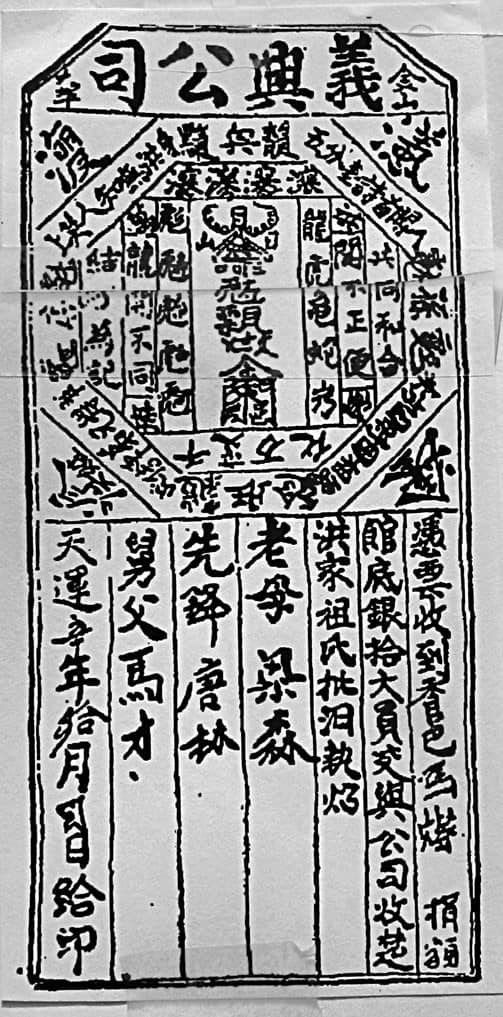
A San Francisco tong membership badge, printed on cloth to be easily concealed within the lining of a jacket or other piece of clothing. (Chinese in Northwest America Research Committee)
These societies initially existed in the U.S. to assist their communities with Chinese schools, English classes and counseling for immigrants. In the 1800s, they were often tied to criminal activity such as prostitution and gambling dens as they fought for a foothold in their new surroundings in America. The word “tong” became unfavorably associated with infighting and illegal immigration of women for both prostitution and marriage.
Between 1852 and 1873, the Hip Yee Tong trafficked 6,000 women. The Nin Yung Tong and the Hong Chow Tong were the two gangs responsible for the start of the bloodshed during the 1871 Massacre.
Today the Tongs are civic-minded groups that support local communities, peoples, and businesses, and are more widely recognized as the Chinese Freemasons.
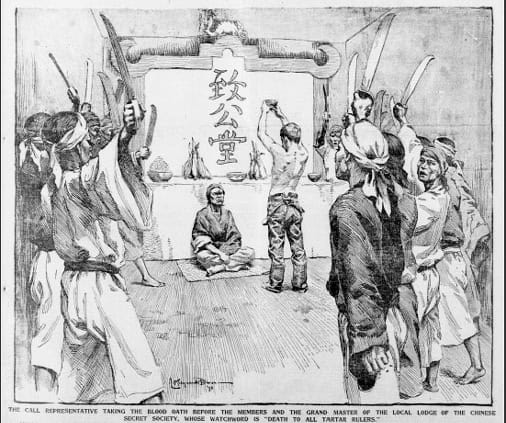
A Tong initation ceremony in San Francisco, ca. 1900. (Chinese in Northwest America Research Committee)